


Implications of proposed tax plan on donations
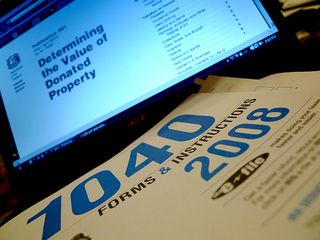
Gene Takagi, Esq., over at the Nonprofit Law Blog, recently wrote about the possible effect of President Obama's 2010 budget plans and the proposed cap of 28% for taxpayers taking itemized deductions. It is interesting to note that in a time when we are encouraging and needing individuals to give more, the new tax plan may discourage annual gifts. The cap is projected to raise $318 billion over 10 years which would help fund the $633.8 billion reserve for health care reform. Are we moving funds from one pot to cover the next pot?
Here is an excerpt from Gene's post:
The Chronicle of Philanthropy (March 12, 2009) provides a good description of the how the reduced cap would affect a wealthy donor:
If a wealthy donor in the top tax bracket made a $100,000 gift today, he or she would save $35,000 in taxes. Under the president's proposal, that same donor would save only $28,000, a difference of $7,000. [A Taxing Proposition by Suzanne Perry and Caroline Preston]
The President's budget also proposes to raise the top two individual income tax rates from 33 percent and 35 percent to 36 percent and 39.6 percent. According to the Chronicle of Philanthropy, combined with the reduced cap on charitable deductions, this "could depress annual giving by anywhere from roughly $4-billion [estimated by the Indiana University Center on Philanthropy] to $9-billion [estimated by the Tax Policy Center, a joint venture of the Urban Institute and the Brookings Institution]." [Economists Try to Calculate the Impact of Tax Changes on Charitable Giving by Suzanne Perry]
Large charitable organizations, such as universities, hospitals, and major cultural institutions, appear most vulnerable to declines in charitable giving that are likely to result if the proposals are implemented because they directly impact only high income taxpayers. However, Richard Steinberg, an economist at the Indiana University Center on Philanthropy suggested that they could create a short-term increase in giving by wealthy donors who take advantage of the higher deduction limits before the changes take effect.
Photo courtesy of jesshibb


Comments