As the Chief Philanthropy Officer at Give2Asia, my job allows me to meet many great donors and leaders doing life-changing work in Asia. But since I am not on the programs team, I do not interact daily or get to really dig deep with groups we are supporting all over Asia. Our program team travels to Asia to visit with our grantees to see first-hand how their programs are running, learn what new issues are cropping up, and generally evaluate to see if the program or relationship can be improved. But that doesn't stop me from finding excuses to visit Asia or our projects there.
My friend, Bill Somerville of Philanthropic Ventures Foundation always tells people to get out of the office if they wish to practice philanthropy. This is very good advice, especially for someone so action-oriented and hands-on like me. In order to talk about the needs of NGOs and their impact on the ground, I need to meet the leaders implementing the projects and speak to those benefiting from the work. My trips to visit grantees and the leaders in the community allow me to learn more about the specific country, its needs, what's happening in the field, what local experts are experiencing and what local people want and need.
In May, I traveled to Indonesia and had the opportunity to see the efforts of many organizations and learned more about the effects of the 2004 tsunami. I posted my observations on Asian Philanthropy Forum in a six-part series.
Part 1: PKSD Mandiri. One group I visited, PSKD Mandiri School, applies the seven habits adopted from the book, 7 Habits of Highly Effective People. PSKD Mandiri teaches a national curriculum with an international approach. The school is inclusive and takes children with special needs and diverse backgrounds.
Part 2: Supporting Women Survivors. Roberto Hutabarat, an expert in permaculture and environmental sustainability, is the program director for CCR. He works on developing livelihood programs for farmers in Aceh. One of his projects is the Bungong Seulanga Nursery in Sampoiniet, a sub-district of the Aceh Jaya District. The project helps women affected by the conflict gain financial and social stability.
Part 3: Good Friends Program. Friends-International conducted a preliminary assessment of the situation and started operations to reduce the number of street children in Aceh in 2007. The program launched with funds provided by Give2Asia. Donors to the program included Happy Hearts Fund, Asian Chefs Association, AIG Disaster Relief Fund, and the Give2Asia Tsunami Recovery Fund (supported by many generous donors).
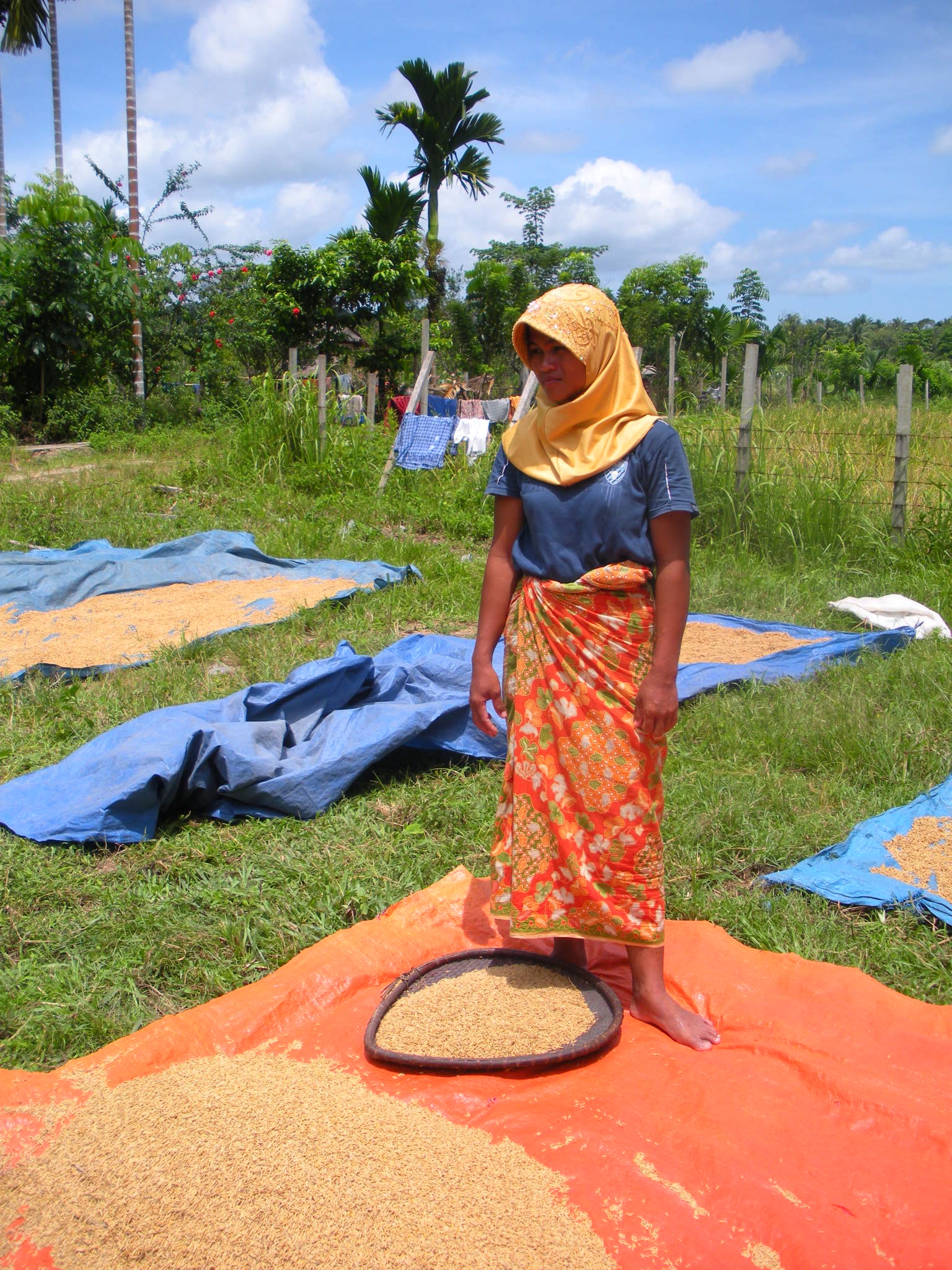
Part 4: Rice Innovation in a Small Village. The farmers of Masen Village were only producing enough rice for eight months out of the year. Caritas CR began working with the farmers of Masen Village in October 2008 to establish a demonstration plot for intensive rice paddy cultivation using the organic system of rice intensification (SRI) method. While the method is labor intensive, it can increase the rice yield more than eight times in one year. It also allows the farmers to plant twice a year. Read about how a farmer becomes an entrepreneur and a local leader.
Part 5: Remembering the Tsunami. At the end of the day, our driver wanted to take us to see several tsunami sites. The tsunami lifted boats and placed them far inland. The “boat on the house” and the “power plant” are the most famous ones. They are remarkable reminders of a horrific event.
Part 6: After the Tsunami. One major rebuilding effort was the $250 million highway running 150 kilometers down Aceh’s west coast. The highway starts from Banda Aceh to Calang. The project is managed by USAID and the the locals know it as the “highway from the American people.” More than eight billion dollars was committed to Aceh after the tsunami tore through the Muslim province. About US$1.5 billion was spent on housing, including the construction of 130,000 homes. However, many homes lacked piped water and electricity so they remain empty. In addition, many villagers were worried whether their homes were earthquake resistant.

Comments